
Parsons Reserve Daffodils in Dartmouth, MA: A Local Guide to One of the South Coast’s Most Unique Spring Traditions
🌼 Parsons Reserve Daffodils in Dartmouth, MA: A Local Guide to One of the South Coast’s Most Unique Spring Traditions
Parsons Reserve Daffodils Dartmouth MA


If you’ve spent any time in South Dartmouth, you’ve probably heard people mention “the daffodils at Parsons.”
And if you haven’t seen them yet, it’s worth adding to your list.
Because this isn’t just a field of flowers. It’s one of those places that quietly defines what living on the South Coast actually feels like.
Where Is Parsons Reserve and Why It Exists
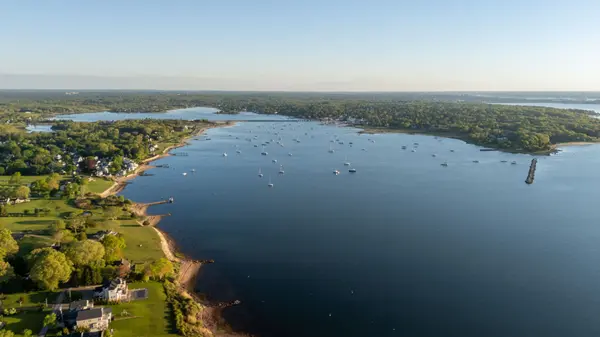
Parsons Reserve is a protected coastal property in South Dartmouth, overlooking Buzzards Bay and tucked into the Russells Mills area.
It’s owned and managed by the Dartmouth Natural Resources Trust, a nonprofit focused on preserving land across Dartmouth.
The property spans roughly 32 acres and was once actively farmed. Like much of Dartmouth, it reflects the town’s agricultural roots, with open fields, stone walls, and a landscape shaped over time.
And honestly, this part matters.
Because this land could have been developed.
Instead, it was protected so it would:
- Stay open to the public
- Preserve wildlife and native ecosystems
- Maintain the character of the land
That’s why it still feels the way it does today. It hasn’t been overbuilt or overdesigned. It’s just been… left alone in the best way.
When Do the Daffodils Bloom at Parsons Reserve?

The daffodils at Parsons Reserve typically bloom from mid-April through early May, depending on the weather.
- Peak bloom is usually mid to late April
- The bloom lasts about 2 to 3 weeks
- It shifts slightly every year
If you’re planning a visit, your best move is to check the DNRT website for daily bloom updates before you go. Timing really is everything with this one.
The Story Behind the Daffodils
This part is what most people don’t know- In the early 1940s, a man named Raymond Pettey planted daffodil bulbs here as part of a commercial flower operation.
At the time, World War II had cut off access to Dutch bulbs from Holland, creating a shortage across the U.S. He saw an opportunity and turned the land into a working daffodil farm.
The war ended. The demand disappeared.
But the flowers stayed.
For decades, the land remained private. Locals knew about it, but it wasn’t something widely shared.
In 2005, William Parsons donated the land to DNRT, and it officially became what we now know as Parsons Reserve.
Today, those same plantings have been multiplying for over 80 years.
Why the Daffodils Feel Different Here

The daffodils here aren’t planted in neat rows or designed for aesthetics.
They’re naturalized, which means they’ve spread organically over time.
So instead of something manicured, you get:
- Large drifts of flowers following the land
- Uneven patches that change year to year
- A field that feels completely uncurated
From a land conservation standpoint, that’s intentional.
They’re part of the ecosystem, not something placed on top of it.
More Than Just a Flower Field
It’s easy to focus on the daffodils, but the reserve itself is the bigger story.
The property includes:
- Coastal meadows that support pollinators
- Wooded trails and vernal pools
- Wildlife habitats with birds, deer, and amphibians
- Open views of Buzzards Bay
When you’re walking through the field, you’re not just in a pretty spot. You’re in protected land that’s being actively managed and preserved.
From Local Secret to Social Media Destination
Over the past few years, Parsons Reserve has changed.
What used to feel like a quiet local spot is now a full-on spring destination.
People are coming from:
- Connecticut
- Maine
- All over Massachusetts and New England
And a lot of that shift is because of social media.
It’s become a go-to location for photos and content. But even with that, it hasn’t lost its core identity, which is kind of rare.
DNRT has kept rules in place to protect it:
- No professional photography setups
- No drones
- No props
That balance is what keeps it from turning into something overly commercial.
Planning Your Visit to Parsons Reserve
📍 Parsons Reserve
50 Horseneck Road, Dartmouth, MA
🅿️ Parking
- Limited at Russells Mills Landing
- Additional parking further down the road
- No roadside parking (you will get towed)
🎟 Entrance
- $5 suggested donation
- Free for DNRT members
⚠️ What to Expect
- 8 to 10 minute walk through the woods
- Steep and uneven trail
- Not stroller-friendly
About DNRT (Dartmouth Natural Resources Trust)
The Dartmouth Natural Resources Trust was founded to protect Dartmouth’s natural resources and open space.
Today, they’ve preserved thousands of acres across the town, including:
- Forests
- Farmland
- Wetlands
- Coastal properties like Parsons Reserve
They don’t just protect land. They maintain it, manage it, and make sure it stays accessible without being overused.
And realistically, without them, this place probably wouldn’t exist in the way it does today.
Watching It Change Over Time
If you grew up here, you’ve probably noticed the shift.
More people. More awareness. More cameras.
But at its core, it still feels the same.
The daffodils spread a little more each year. The trails get a little more worn in. But the experience hasn’t been overdone.
That balance is what makes it work.
Why Parsons Reserve Matters
Parsons Reserve is a good example of what thoughtful land conservation actually looks like.
It preserves:
- Open space in a high-demand coastal area
- Public access to natural land
- A connection to Dartmouth’s past
- A place that feels simple and real
And then for a few weeks each year, it gives you something extra.
Living Near Parsons Reserve (Dartmouth Real Estate Insight)
This is the part people don’t always think about.
Living in areas like:
- South Dartmouth
- Russells Mills
- Padanaram
Means having places like this as part of your everyday life.
Not just beaches. Not just houses.
But access to preserved land, quiet trails, and moments like this.
That’s a big part of what draws people to Dartmouth MA real estate in the first place.
Final Thoughts
The daffodils are what bring people in.
But they’re not the whole story.
Parsons Reserve works because of what it is underneath. Protected land, thoughtfully managed, and left mostly alone.
If you haven’t been, go.
And before you do, check the DNRT website for daily bloom updates so you hit it at the right time.
We share spots like this because they're part of what makes the South Coast worth living on. If you want more local guides, real estate updates, and hidden gems — subscribe to our newsletter below.
Categories
- All Blogs 57
- Beaches 5
- buyers 1
- Buying 1
- coastal living 17
- Dartmouth 20
- Dartmouth MA Real Estate 8
- Divorce & selling a home 1
- Equestrian 1
- Equestrian Real Estate 1
- Fall River, Massachusetts 1
- Farm Coast 1
- Farmland 1
- Fixer Upper 1
- Investors 1
- Land Sale 1
- Local Events 3
- Local Guides 6
- Local History 3
- Local Real Estate News 7
- Moving to Massachusetts 12
- New Bedford, Massachusetts 13
- Padanaram Village 7
- Rental 1
- Rochester MA Real Estate 1
- sellers 2
- Selling a home in Massachusetts 6
- Selling a home in Rhode Island 1
- South Coast Living 25
- South Coast Massachusetts Real Estate 3
- South Dartmouth 1
- Southcoast, Massachusetts 16
- The South Coast Sloop 1
- Things to Do in Dartmouth 3
- Things to do in New Bedford 2
Recent Posts