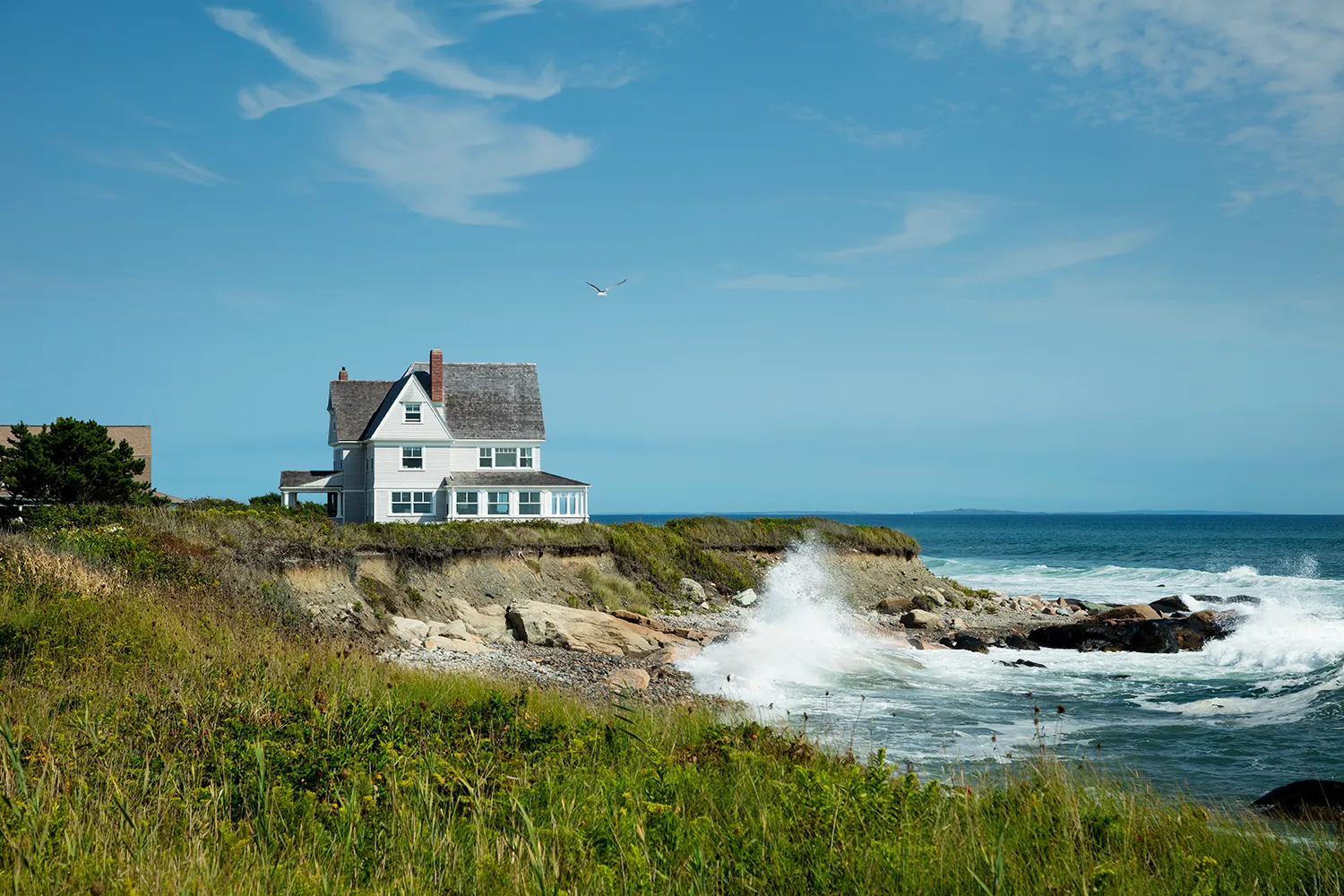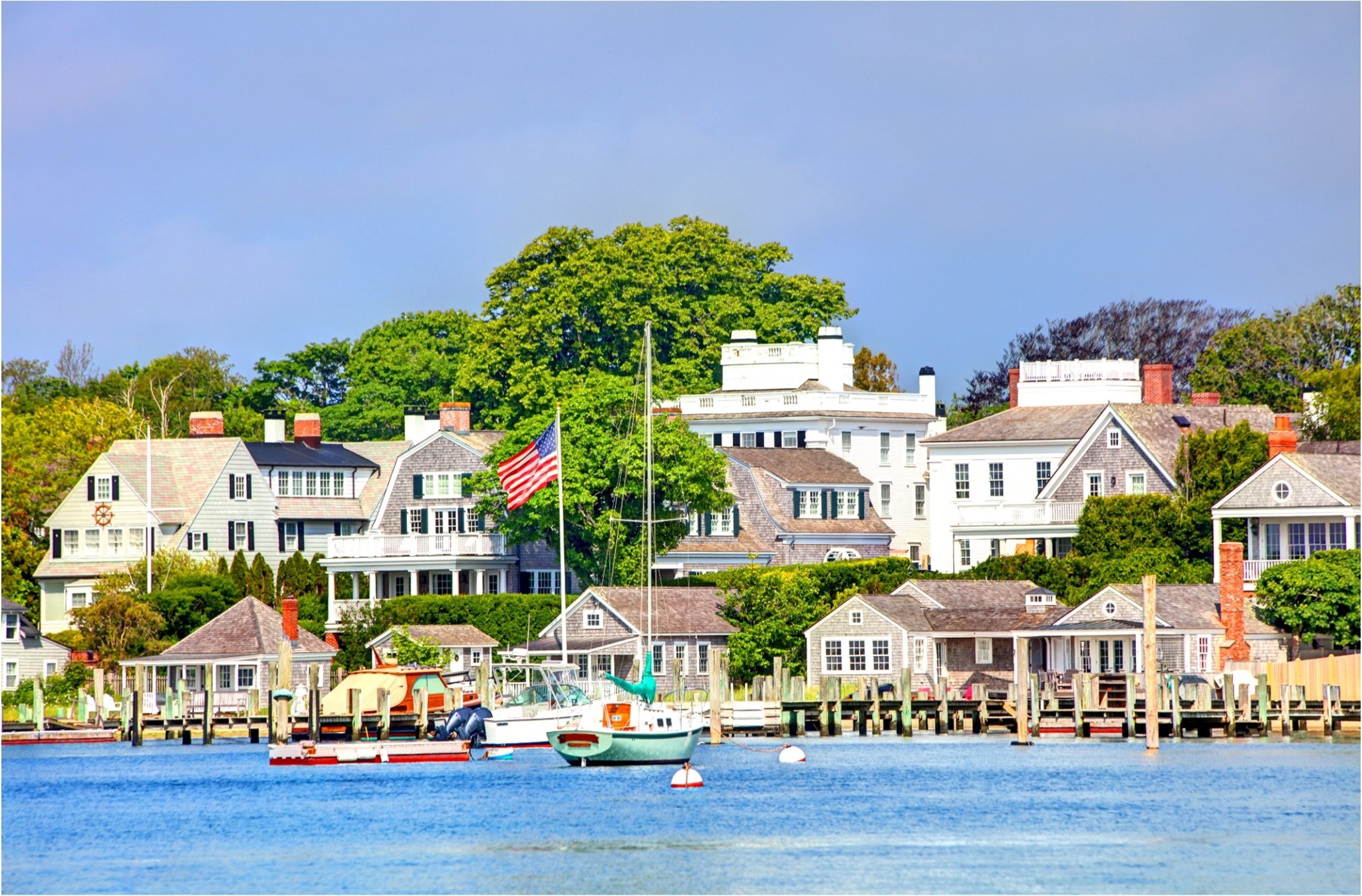
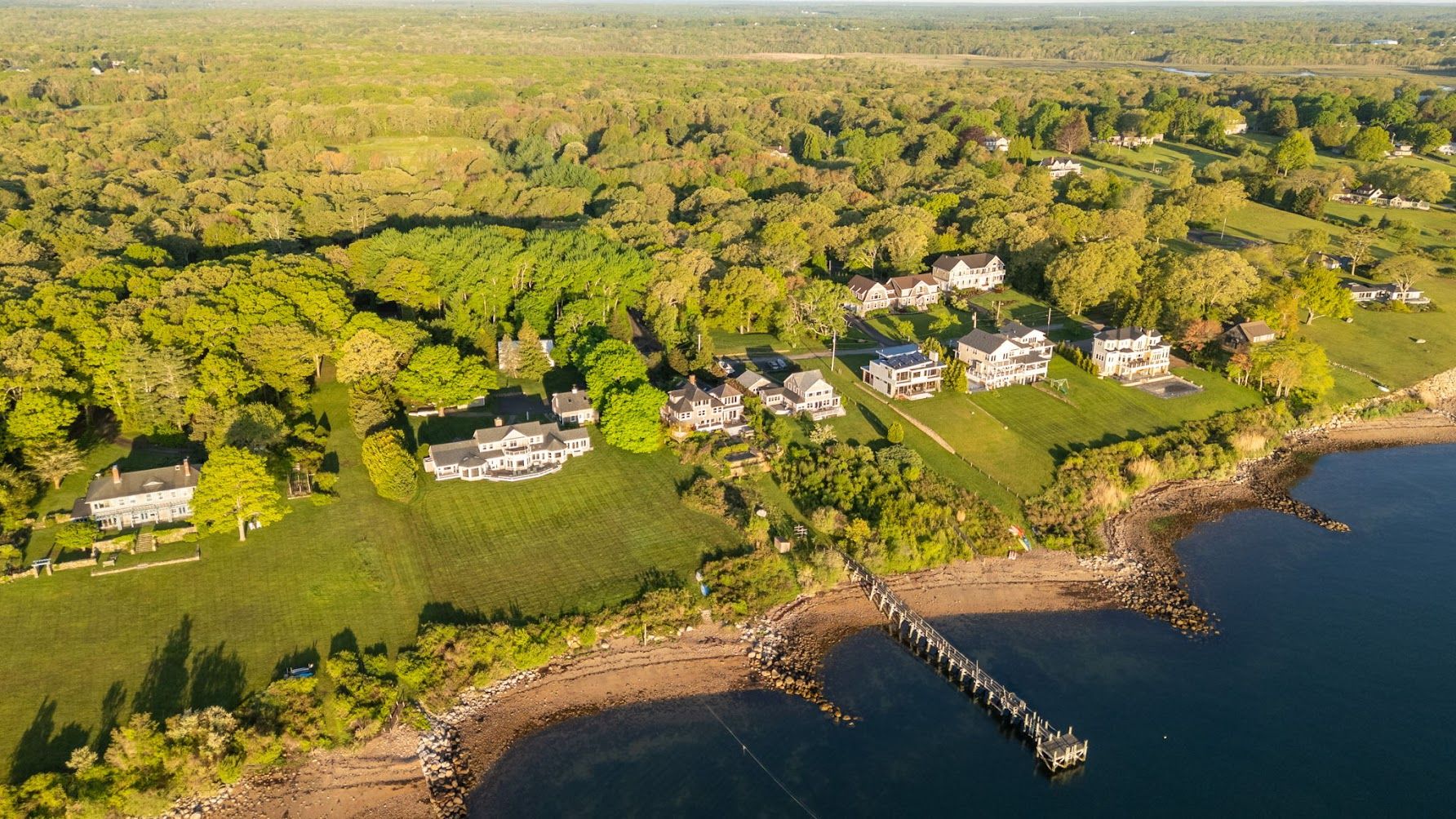
If you are buying near the water in Westport, Dartmouth, Fairhaven, Marion, Mattapoisett, or anywhere on Cape Cod, homeowners insurance is no longer a detail you sort out the week before closing. It is a real cost that varies house to house, and on some properties it decides whether the deal makes sense at all.
Here is the short version. Carriers have pulled back from the Massachusetts coast, a large share of coastal homes now land on the state's FAIR Plan or in the surplus lines market, and premiums have climbed hard over five years. The buyers who handle this well treat insurance like a closing cost. They price it before they offer, and they lock in real quotes during the inspection window, not after the mortgage commitment.
What changed on the coast
Cape insurance agents have watched the private market thin out for two decades. In a Boston.com feature from April 2026, longtime Cape agent Jane Logan summed up the market in one line: "Everyone's either on the FAIR Plan or Lloyd's of London." The same article cites a LendingTree analysis finding that Massachusetts added nearly 13,500 uninsured properties between 2023 and 2024, homes where owners dropped coverage entirely, often because of cost.
The price data backs that up. Research from the National Bureau of Economic Research found average U.S. home insurance costs rose from $1,902 in 2020 to $2,530 in 2023, with high-risk areas rising fastest. Reporting by the Provincetown Independent in March 2026, drawing on that NBER data, put the increase for Cape Cod premiums at about 30 percent from 2020 to 2024, and pegged Provincetown's average premium at $4,189 in 2025, a 52 percent jump in two years.
And the FAIR Plan keeps growing. According to a 2026 explainer from CommonWealth Beacon, about 4 in 10 homes on the Cape and Islands are now insured through the FAIR Plan, up from about a third in 2023, and the plan covered more than 173,000 properties statewide in 2024. This is not just a Cape story. Bristol and Plymouth counties, together with the Cape and Islands, account for roughly 55 percent of all FAIR Plan policies, which means South Coast buyers in towns like Westport, Dartmouth, and Fairhaven are shopping in the very same market.
What the FAIR Plan is, and what it is not
The Massachusetts FAIR Plan is formally the Massachusetts Property Insurance Underwriting Association, the state's insurer of last resort. It exists for owners who cannot find coverage in the regular voluntary market, and it writes real homeowners policies on forms approved by the state Division of Insurance.
Buyers should understand three things about it.
- It has a ceiling. Dwelling coverage tops out at $1 million. On higher-value coastal homes, that means layering an excess policy on top or going to the surplus lines market, where carriers such as Lloyd's of London syndicates write the risk. Pricing and terms there vary widely, so lean on an independent agent who places coastal business every week.
- The wind deductible is a percentage, not a flat number. Coastal policies commonly carry hurricane or wind deductibles set as a percentage of your dwelling limit. Simple math: a 2 percent deductible on a $700,000 dwelling limit is $14,000 out of your pocket before wind coverage pays a dollar. Always convert the percentage to dollars before you sign.
- It does not cover flood. No standard homeowners policy does, FAIR Plan included. Flood coverage is a separate policy through the National Flood Insurance Program or a private flood carrier. If the house sits in a mapped flood zone, your lender will require it.
What it actually costs right now
Anchor the numbers to real price points. The median single-family sale price in Barnstable County was $760,000 in the first quarter of 2026, up 1.3 percent from a year earlier, according to the Cape Cod and Islands Association of Realtors. On the South Coast, Movoto put Dartmouth's median list price around $875,000 in June 2026. The insurance follows the value: rebuilding cost drives your dwelling limit, and your dwelling limit drives both the premium and that percentage deductible.
For premium context, Provincetown's 2025 average of $4,189 is a fair reference point for exposed coastal property, while inland and better-protected homes can run meaningfully less. The 2026 outlook from Vargas Insurance reports that after widespread increases of 10 to 25 percent in the prior year, most Massachusetts homeowners are seeing flat to under 5 percent adjustments in 2026. The catch is on the coast: high-risk areas still face stricter underwriting, flat deductibles of $2,500 to $5,000 have become standard, and roof age is now a gating item. An older roof without documentation may only qualify for actual cash value coverage, which pays depreciated value instead of full replacement cost.
A practical budgeting rule: on a coastal South Coast or Cape purchase, pencil in several thousand dollars a year for homeowners coverage, more if you are on or near the water, plus flood insurance if the home is in a mapped zone. Then replace the pencil number with real quotes as fast as you can.
Line it up like a closing cost
The sequence matters more than anything else in this post.
- Before you offer: ask the listing agent for the seller's current carrier, premium, and any claims in the past five years. A loss history on the house follows the house.
- The day your offer is accepted: call two or three independent agents who write coastal business daily. Ask each to shop the voluntary market first and quote the FAIR Plan as the backstop.
- During the inspection window: this is the whole game. Your inspection tells you the roof's age and condition, the state of the electrical and heating systems, and whether there is a wood stove or an underground oil tank, all of which change quotes. Firm up your numbers while you can still negotiate or walk.
- Before your commitment date: your lender needs proof of insurance to close, and Massachusetts is an attorney-closing state, so your closing attorney will collect the binder. Do not let this become a scramble in the final week.
- Ask about credits: alarm systems, water sensors, newer roofs, and storm protection can all earn discounts. Documentation is what unlocks them.
If you want the broader checklist for the whole purchase, start with our questions to ask when buying a home in Massachusetts. For where prices are headed, read our 2026 South Coast housing forecast.
An elevation certificate can change everything
If the home is in a FEMA flood zone, ask one question early: is there an elevation certificate?
Under FEMA's current pricing system, Risk Rating 2.0, an elevation certificate is optional. FEMA prices flood policies using its own modeled elevation data. But if the house actually sits higher than FEMA's model assumes, submitting a certificate can lower the premium, and FEMA does not raise your rate if the certificate comes back unfavorable. It is a one-way lever in your favor.
Sellers of coastal homes often already have one from a past refinance, sale, or construction project, so ask before paying for a new one. If you do need one, a licensed surveyor prepares it, and reported costs generally run from about $500 to $2,000 depending on the property, so confirm pricing locally. On the right house, that survey work can pay for itself every single year in flood premium savings.
Questions that protect you before you sign
- What does the seller currently pay, with which carrier, and has the policy ever been nonrenewed?
- Any insurance claims on the property in the past five years?
- How old is the roof, and is there paperwork proving it?
- Is any part of the property in a FEMA flood zone, and is there an elevation certificate on file?
- What is the wind or hurricane deductible in actual dollars, not percent?
- Is the quote firm, or is it an estimate that still has to survive underwriting review?
None of this should scare you off the coast. It should change your sequence. Insurance has become part of the offer strategy on the South Coast and Cape, and buyers who price it early negotiate better and close calmer. If you are planning a purchase in Westport, Dartmouth, Fairhaven, Marion, Mattapoisett, or across the bridge on the Cape, we build the insurance step into your plan from day one. Start with us at Buying with TIDES.